Top 10 Dangerous DIY Ear Wax Removal Methods & Why Professionals Are Safer
Before you reach for a cotton bud, read this. These popular home methods cause real harm to real people — every single day across the UK.
By Out With The Wax LTD · 14 min read
of people have tried removing ear wax themselves, per RNID research
rise in A&E ear injuries from DIY devices, per ENT UK data
increase in UK sales of at-home ear wax removal kits in the past year
Your Ears Are Already Cleaning Themselves
Ear wax — medically known as cerumen — is not dirty. In fact, it is your body's own built-in defence system. It traps dust, dead skin cells, and bacteria before they can reach your eardrum. Furthermore, it naturally migrates outward through the simple movement of your jaw when you talk or chew. So, in most people, the ears never actually need manual cleaning at all.
Problems only arise when people interfere with that natural process — especially by inserting objects into the ear canal. The canal itself is only around 2.5cm long and lined with extremely delicate, sensitive skin. As a result, even a small mistake can cause lasting damage. If you are already experiencing symptoms, it is also worth understanding what draws out ear wax safely before attempting anything at home.
Additionally, it is important to recognise that not every blocked feeling is caused by wax. In some cases, it could be an infection, fluid behind the eardrum, or another underlying condition entirely. For that reason, professional assessment is always the safest first step.
⚠ Important — Please Read Before Continuing
If you are experiencing persistent blocked ears, muffled hearing, pain, dizziness, or discharge — please do not attempt self-treatment. These symptoms may indicate an infection, a perforated eardrum, or another condition that requires proper clinical assessment before any wax removal is attempted. Urgent ear wax removal in Manchester is available through Out With The Wax if you need to be seen quickly.
10 DIY Ear Wax Removal Methods to Avoid
Below, we cover the 10 most commonly used — and most dangerous — methods people attempt at home. Some are more harmful than others, but none of them are as safe or effective as professional treatment. Furthermore, several of them actively make the problem worse.
-
01Very High Risk
Cotton Buds (Q-Tips)
Cotton buds are, without doubt, the number one offender. They are the most commonly misused ear care product in the UK and, unfortunately, one of the most damaging. Rather than removing wax, cotton buds push it deeper into the canal — compacting it tightly against the eardrum. Moreover, they scratch the delicate skin lining the canal, creating an entry point for bacteria. In more serious cases, they can rupture the eardrum entirely. Despite causing tens of thousands of ear injuries globally every year, they are still marketed in packaging that implies they are safe for ear use. As a result, millions of people continue to use them without realising the risk. If you are wondering about safer alternatives, our guide on which ear drops to use for blocked ears is a good starting point.
-
02Very High Risk
Ear Candles (Ear Candling)
Ear candles became a widespread trend online, but there is no credible scientific evidence that they work. The process involves placing a hollow, cone-shaped candle into the ear and lighting the other end. In theory, the heat should create suction to draw wax out. In practice, however, they do none of this. Instead, they drip hot wax directly into the ear canal — causing burns and, ironically, creating new blockages. The FDA has officially warned against their use. Furthermore, clinicians regularly see patients who have made their situation significantly worse after trying them. Therefore, despite how popular they appear online, they should be avoided entirely.
-
03Very High Risk
Bobby Pins, Hairgrips & Paper Clips
RNID research found that people across the UK are using hairgrips, paper clips, and even toothpicks to try to clear their ears. Although it may seem harmless, these rigid objects offer no control whatsoever inside a narrow, curved canal. They scratch the delicate skin lining, introduce bacteria from the hands, and can easily perforate the eardrum — an injury that may require weeks of medical treatment and can result in conductive hearing loss. In addition, because the eardrum sits so close to the entrance of the canal, even a moment of misjudgement can cause a serious and lasting injury.
-
04High Risk
Ear Scoops & Metal Curettes
Ear scoops are widely sold online and in pharmacies, and they look reassuringly clinical and precise. However, using one without proper training is genuinely dangerous. The key problem is that you simply cannot see what you are doing. The ear canal curves sharply, and the eardrum sits just a short distance in. As a result, even a small slip — or simply holding the tool at the wrong angle — can cause cuts, bruising, or perforation. ENT UK reported a 12% rise in A&E ear injuries linked to these DIY tools in a single year, which highlights just how widespread the problem has become. If you need urgent ear wax removal, please contact us rather than reaching for a tool at home.
-
05Moderate-High Risk
At-Home Irrigation Kits
Bulb syringes and water-jet irrigation kits are widely marketed as a safe, accessible alternative to professional treatment. Nevertheless, they carry their own significant risks. If there is an existing eardrum perforation — which you may not even be aware of — flushing water into the canal can force fluid deeper, leading to serious infection. Even in ears without perforation, trapped water disrupts the natural pH balance of the canal, creating conditions that bacteria and fungi thrive in. Moreover, these kits are unable to assess whether your symptoms are caused by wax or something entirely different. To understand the difference between home options and clinical treatment, take a look at our article on whether ear wax removal kits actually work.
-
06Moderate Risk
Undiluted Hydrogen Peroxide Drops
Over-the-counter ear drops containing hydrogen peroxide or carbamide peroxide can help soften wax when used correctly and under the right circumstances. The problem, however, is that many people use them undiluted, too frequently, or when they already have an ear infection or a perforated eardrum — none of which they may know about. As a result, undiluted use can cause dizziness, significant irritation, and temporary hearing loss. These drops should therefore only be used under medical guidance, and only after it has been confirmed that your eardrum is intact.
-
07Moderate Risk
Ear Camera Endoscope Kits
These camera-equipped tools went viral in 2024 and 2025, clocking millions of views on TikTok and Instagram. The appeal is understandable — you can actually see inside your own ear. However, seeing and knowing what you are looking at are two very different things. Inflammation, fungal growth, and early infection can all be easily mistaken for a simple wax build-up. Consequently, many users attempt to remove what they see using the attached curette tool, often pushing wax deeper in the process. A camera does not replace clinical judgement — it simply gives a false sense of confidence. If you are concerned about what you see in your ear, it is far better to book a professional assessment than to attempt home treatment.
-
08Moderate Risk
Olive Oil Overuse
Olive oil drops are widely recommended as a gentle way to soften ear wax, and in the right context they genuinely can be helpful. However, overuse — or using them in an already-infected ear — can worsen the situation considerably. Excess oil disrupts the ear's natural bacterial balance and can delay appropriate treatment. Furthermore, if drops have not helped within a week, the underlying problem is almost certainly not straightforward wax build-up. No amount of olive oil will resolve an infection or a fungal problem. You can read more about this in our guide on whether olive oil actually clears ear wax. If in doubt, please seek professional advice.
-
09High Risk
Fingers, Matchsticks & Improvised Tools
It may sound obvious, but it happens far more often than you might expect. Fingernails, matchsticks, rolled tissues, and even pen lids all get used in attempts to scratch an itch or dislodge a wax build-up. Any object that is not sterile and specifically designed for ear use introduces bacteria directly into a warm, moist environment that is perfectly suited to infection. Even trimmed fingernails can scratch the canal lining and cause Otitis Externa — a painful and sometimes serious ear canal infection that often requires antibiotic treatment. Moreover, repeatedly inserting objects into the ear can actually stimulate more wax production over time, making the problem progressively worse.
-
10Moderate Risk
Self-Syringing With a Water Flosser or Shower
Pointed streams of water from a shower head or a water flosser — such as a WaterPik — directed into the ear canal can be surprisingly and unexpectedly forceful. This kind of pressure can cause pain, dizziness, and in some cases rupture an already thinned or previously damaged eardrum. In addition, water trapped inside the canal after this type of flushing can sit against the eardrum for hours, significantly raising the risk of infection. This method should therefore never be used as a form of ear cleaning. If you are looking for safe blocked ear solutions, we have a dedicated guide that covers what actually helps.
Experiencing blocked ears right now? Skip the DIY risk and book a same-week appointment.
Book NowWhat can go wrong
The Real Consequences of DIY Ear Wax Removal
The risks described above are not theoretical. Clinics across the UK regularly see patients who have made their situation significantly worse through self-treatment. In many cases, what started as a minor build-up has turned into a much more serious problem as a direct result of home intervention. Moreover, the consequences can sometimes be long-lasting or even permanent.
The most common outcomes that professionals see following DIY ear wax removal include:
- Impacted wax — pushed deeper by DIY tools, creating a painful, dense blockage that then requires professional removal to resolve safely
- Perforated eardrum — a rupture that may cause weeks of pain, significantly muffled hearing, and in some cases requires medical or surgical intervention
- Otitis Externa — a bacterial or fungal ear canal infection caused by damage to the skin lining, often requiring antibiotic or antifungal treatment
- Tinnitus — persistent ringing or buzzing in the ear triggered by pressure changes or physical trauma to the canal
- Vertigo and balance problems — caused by pressure changes or inner ear involvement, which can affect daily life significantly
- Permanent hearing loss — in the most severe cases, particularly where the eardrum or surrounding inner ear structures sustain lasting damage
Furthermore, without professional tools and clinical training, it is simply not possible to determine whether your symptoms are caused by wax, infection, fluid behind the eardrum, or another condition entirely. A blocked feeling is not always caused by wax. Consequently, treating the wrong problem can seriously delay appropriate care and make recovery longer and more difficult. You can read more about the causes behind hearing problems in our post on loss of hearing in one ear.
Why Professional Ear Wax Removal Is Safer
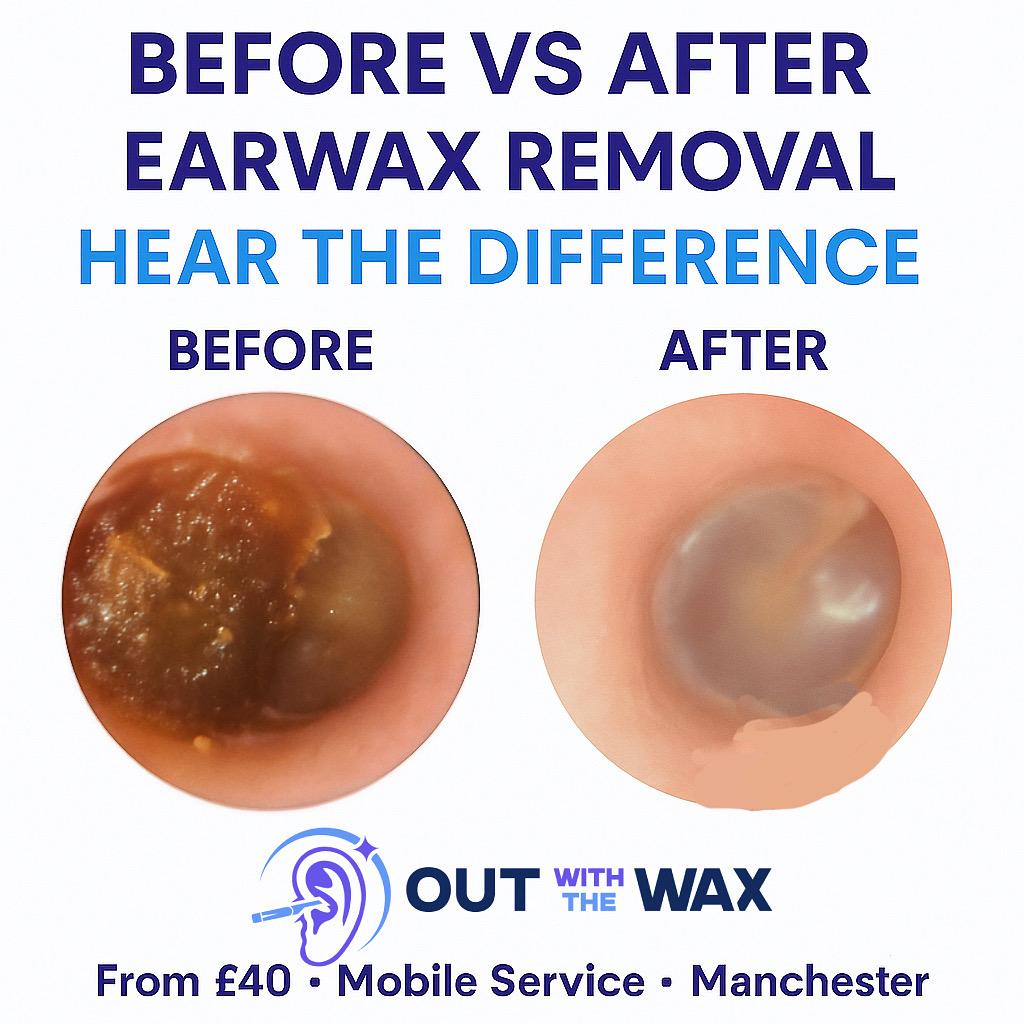
At Out With The Wax, we use microsuction — a clinically approved, dry technique performed under direct magnification. It is widely regarded as the safest and most comfortable method of ear wax removal available in the UK. Moreover, because we operate as a mobile service, we bring the clinic directly to you. Here is why professional treatment makes all the difference:
- We perform a full otoscopy before we begin, so we can assess exactly what is in your ear before touching it
- We can identify infections, fungal growth, or perforations that might make any removal unsafe at that point in time
- Microsuction works under direct visual guidance throughout — there is no guesswork and no blind tools involved
- It is a dry procedure with no water involved, which significantly reduces the risk of infection compared to irrigation
- Treatment is performed by trained, insured professionals with a full clinical background in ear care
- Quick, comfortable, and highly effective — most appointments take under 30 minutes from start to finish
- Available as a mobile home visit service — we come to you with no waiting rooms and no GP referral needed
Related Articles
How to Remove Ear Wax at Home: Risks and Safer Alternatives
Product ReviewDo Ear Wax Removal Kits Actually Work?
Common QuestionsIs Ear Wax Removal Painful? What to Expect
NHS vs PrivateWhy Private Ear Wax Removal May Be Better Than the NHS
Symptom HelpBlocked Ear Solutions: What Actually Helps
Our ServiceMobile Ear Wax Removal — We Come to You
Frequently Asked Questions
Is it ever safe to remove ear wax at home?
For most people, the ears manage themselves naturally without any intervention at all. However, if you experience mild symptoms, a few drops of olive oil used correctly over a few days may help to soften wax and allow it to migrate outward naturally. That said, if symptoms persist beyond one to two weeks, or if you have any history of ear surgery, eardrum perforations, or frequent infections, you should always see a professional rather than attempt home removal. Furthermore, if your symptoms include pain, dizziness, or discharge, please do not attempt any home treatment and seek professional advice promptly.
Why does my GP not offer ear wax removal anymore?
Following changes to the standard GP contract in England, ear irrigation is no longer a core service that all surgeries are required to offer. As a result, RNID research found that just under half of integrated care boards in England do not commission a full ear wax removal service at all. This means that thousands of patients across the UK are being left without an accessible NHS option. Consequently, private mobile services like Out With The Wax have become an important and convenient alternative for many people in Manchester and the surrounding areas.
What is microsuction and does it hurt?
Microsuction uses a small, gentle suction device under direct magnification to carefully remove wax from the ear canal. Importantly, it is a completely dry procedure — no water is involved at any point. Most patients find it very comfortable, with only a mild sensation of pressure or noise during the treatment. Moreover, because the clinician can see exactly what they are doing throughout the process, it is widely considered the gold standard for ear wax removal. You can find out more on our dedicated microsuction page.
How do I know if I have impacted ear wax?
Common signs of impacted ear wax include muffled or noticeably reduced hearing, a sensation of fullness or pressure in the ear, a mild dull ache or earache, tinnitus (ringing or buzzing), and occasionally dizziness. If you are experiencing any of these symptoms — particularly if they came on after using a cotton bud or another object — please book a professional assessment rather than attempting further DIY treatment. You can also read more about the causes in our article on what causes excessive ear wax.
How much does professional ear wax removal cost in Manchester?
At Out With The Wax, we offer transparent, affordable pricing for our mobile microsuction service. Because we come directly to your home or workplace, there are no travel costs or waiting room queues to deal with. For full pricing details, visit our ear wax removal cost in Manchester page. We also cover a wide range of areas across Greater Manchester including Altrincham, Didsbury, Stockport, and Trafford.
How quickly can I get an appointment?
We offer flexible mobile appointments across Greater Manchester and aim to see patients as quickly as possible. In many cases, appointments are available within one to two days — including evenings and weekends. To check availability and book your slot, simply head to our online booking page and choose a time that suits you.
Not sure if you need professional treatment? Get in touch — we are happy to advise before you book.
Contact UsBook Your Professional Ear Wax Removal Today
Skip the DIY risk. Our mobile microsuction service comes directly to you — no waiting rooms, no GP referral needed, and no fuss. We cover Manchester and surrounding areas.
Book an Appointment Learn About Our ServiceMedical disclaimer: This article is intended for informational purposes only and does not constitute medical advice. If you are experiencing ear pain, discharge, sudden hearing loss, or dizziness, please seek medical advice promptly. Out With The Wax LTD is a private ear care service and is not a substitute for your GP or NHS services.